Barn Conversion Mortgages: Self-Build vs Bridging
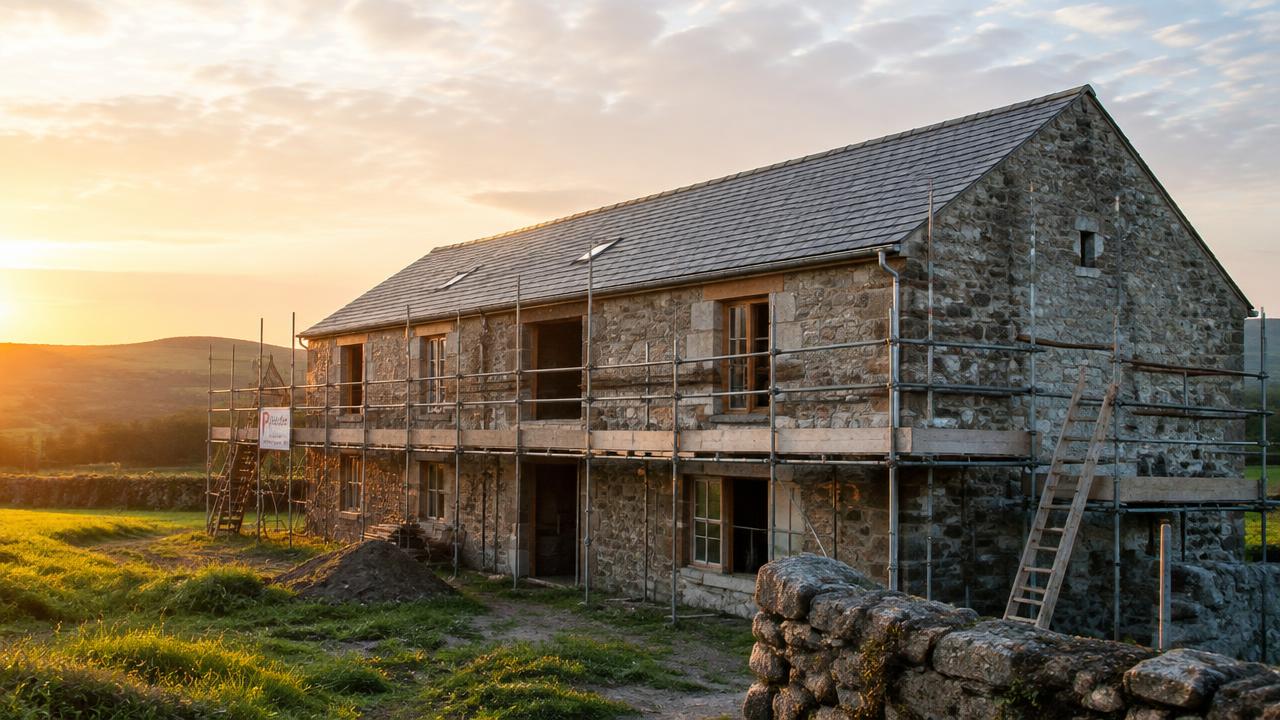
The myth: barn conversions need bridging finance
One of the most common things we hear from people looking at a barn in Cornwall is: *"We'll need bridging or development finance for this, won't we?"*
Not necessarily. Bridging and development finance have their place, but they're often far more expensive than people realise, and for many barn conversions they aren't needed at all. A self-build mortgage is designed for this kind of project, and it can be a much more cost-effective way to fund it.
Why lenders treat barns differently
A barn that hasn't been converted usually isn't a home yet. It may have no kitchen, bathroom, proper heating or even a weathertight roof. Standard residential lenders won't usually lend on a property like that, because it isn't habitable.
That's where the "you need bridging" idea comes from. But a standard mortgage isn't the only alternative to bridging.
How a barn conversion mortgage works
A self-build mortgage releases money in stages as the work progresses, rather than as one lump sum on day one. A typical barn conversion might look like this:
1. Purchase of the barn (and any land)
2. Structural work: foundations, walls, roof
3. Weathertight: windows, doors, roof finished
4. First fix: plumbing, electrics, insulation
5. Second fix and completion: kitchen, bathrooms, decoration, sign-off
Before each release, the lender usually sends a surveyor to check the work. Some lenders release money in arrears (after each stage is finished), and others offer advance stage payments, releasing money before each stage so you aren't funding the build out of your own savings first.
Self-build mortgage vs bridging loan: why it's usually cheaper
- ✓Lower interest rates: self-build mortgage rates are typically higher than a standard residential mortgage, but usually well below bridging rates, which are often charged monthly.
- ✓You only pay interest on what's been released, not the full loan from day one.
- ✓No forced refinance: bridging is short-term and has to be repaid, usually by remortgaging once the work is done. That means a second set of fees, valuations and legal costs, and the risk that rates or your situation have changed. Many self-build mortgages simply carry on as your long-term home loan once the barn is finished.
- ✓Fewer exit fees: bridging loans often come with arrangement fees, exit fees and other charges that add up quickly.
What lenders usually want to see
Every lender is different, but you'll typically need:
- ✓Planning permission: full planning, or prior approval under permitted development (Class Q) for agricultural buildings
- ✓Building regulations approval and a plan for structural warranty or architect's certificates
- ✓Detailed costings and a build schedule: our Self-Build Budget Planner is a good place to start
- ✓A deposit, usually a share of the purchase price plus some of the build costs, and a sensible contingency
- ✓Evidence you can afford the mortgage once it's fully drawn, and somewhere to live while the work happens
When bridging might still make sense
Bridging can still be the right tool, for example if you need to buy quickly at auction, the barn needs work before any lender will consider it, or planning isn't yet in place. The point isn't that bridging is always wrong. It's that it shouldn't be the automatic choice. We'll compare both with you and explain the costs side by side.
Two barn conversions we've helped with
Case study: a family farm barn, from bridging to a long-term mortgage
One client was converting a barn on a farm owned by his family. Because of his particular requirements, a bridging loan was the right tool to get the project started. Once the conversion was complete, we arranged a residential mortgage to replace the bridging loan with long-term finance, so he wasn't left on short-term borrowing a day longer than needed.
This is the right way to use bridging: as a planned, short-term step with a clear exit, not as the default for the whole project.
Case study: buying and renovating a barn with a self-build mortgage
Another client wanted to buy a barn and convert it into their home. They assumed this would mean development finance. What they didn't realise is that a self-build mortgage can fund both the purchase and the conversion works.
That meant the cost of the borrowing was much closer to a residential project than a commercial development built for profit, with money released in stages as the work progressed.
Are barn conversions affordable?
Often more than people expect. Many barns needing conversion sell for up to around £200,000, plus the build costs. With a self-build mortgage, that can put a barn conversion within reach of many buyers, not just developers. Every project is different, so we'll look at the purchase price, build budget, deposit and your income together before you commit.
Cornish barns: things to watch
Barns in Cornwall often come with private drainage, their own water supply, restricted access or agricultural ties. Listed status and bat surveys can also affect timescales. Raise these early, because they can affect both the build and which lenders will help.
Talk to us before you commit
The earlier we're involved, the more options you'll have, ideally before you agree a purchase. See our self-build mortgages page, where you'll also find live searches for barns to convert and land with planning in Cornwall, or get in touch and we'll look at whether a self-build mortgage could fund your barn conversion.
There are no broker fees for first-time buyers. On other cases a fee may apply, and it is always agreed with you in writing first. Your home may be repossessed if you do not keep up repayments on your mortgage.
Ready to Take the Next Step?
Book a free consultation to discuss your specific mortgage needs with our Cornwall experts.
Book Free Consultation